
Family immigration is one of the biggest decisions a family can make to build a brighter, safer, and more stable future. Moving as a team to a new country, beyond changing the geography of life, means entering a completely different cultural, economic, and educational structure that affects all aspects of the lives of children and parents. Achieving success on this winding path requires a detailed understanding of the various legal methods for obtaining a companion visa, a comprehensive analysis of key factors such as health and education systems, and finally, a smart choice of a country that provides the highest standards of welfare and security for the foundation of the family. In this article, we will review the family immigration guide. Stay with us.
Table of Contents
ToggleWhat are the types of family immigration methods?
Family immigration is one of the most popular and reliable ways to join family members in developed countries. International laws usually place great value on family unity, which is why various programs have been designed for this type of immigration, the most important of which are the following:
Immigration through spouse sponsorship
Immigration through marriage or spousal sponsorship is one of the fastest and most common methods of family immigration. In this method, a person who has permanent residency or citizenship in a foreign country (such as a Greek visa) undertakes to provide for the living expenses of their spouse for a specified period. The immigration office of the destination country carefully examines the file to ensure that the relationship is real and not a formal marriage. Documents such as an official marriage certificate, joint photos, joint bank accounts and chats play a key role in proving this relationship. After final approval, the spouse of the applicant is granted permanent residency.
Immigration of dependent children
This method allows parents to bring their unmarried children who meet certain age requirements to the destination country. The age limit for a dependent child in most countries, such as Canada, is 22 years, unless the child is completely dependent on the parents due to physical or mental disability. The important point in this method is that the child must not be married or have a life partner. The process of obtaining this visa is usually a high priority in immigration offices to prevent long-term separation of children from their parents. By obtaining this visa, the children benefit from the right to free education and health services in the destination country. Today, people with German visa are making more efforts than ever to accompany their children.
Family reunification visa through parents
Many immigration-receiving countries allow citizens and permanent residents to apply for residency for their parents or grandparents. This usually comes in two forms: permanent residency programs (which in countries like Canada operate on a lottery or quota basis due to limited capacity) and temporary long-term visas (such as Canada’s Super Visa). In this method, the sponsoring child must prove that their annual income exceeds a government-set threshold and can fully cover their parents’ health insurance and welfare costs so that they do not become a burden on the host country’s social services system.
Immigration through nomination
A fiancé visa, such as the K-1 visa in the United States, allows individuals to meet and marry their foreign fiancé in the destination country. The main requirement for this method is that the parties have met in person at least once in the past two years and have proven their genuine intention to marry within a specified period of time (for example, 90 days after entering the destination country). After entering the country and officially registering the marriage, the applicant can apply to change their status to permanent residence (Green Card or similar). This method is the best option for couples who are not yet officially married but intend to start a life together.
Companion visa for first-class members in work and study cases
This method is for people who have applied through a study or work visa (non-family sponsorship) and now want to bring their immediate family, i.e. spouse and minor children, with them. In this type of immigration, the spouse of the main applicant is usually eligible for an “Open Work Permit” which allows him/her to work full-time for any employer. The children are also allowed to study in public schools in the destination country for free. It is also possible to obtain a Digital Nomad visa in such circumstances.
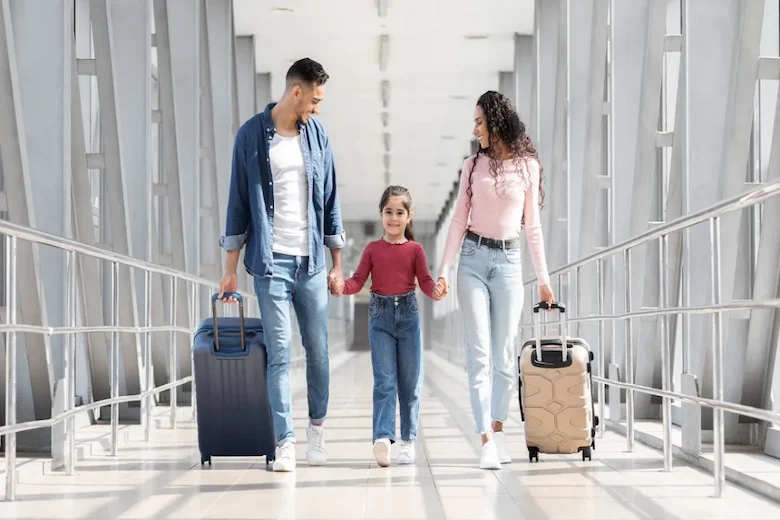
Key factors in choosing the best country for family immigration
Choosing a destination country for family migration is one of the most crucial decisions in life, as the future, well-being, and peace of mind of all family members depend on this choice. Unlike individual migrations, which are more flexible, planning for family migration requires examining multiple factors simultaneously to provide a safe and dynamic environment for the children to grow and the parents to feel comfortable.
Educational system and school structure
The quality of the education system and access to reputable schools is undoubtedly one of the first priorities of parents in the family migration process. Countries that offer free or low-cost public education with high international standards (such as Canada, Finland, and Germany) provide a suitable platform for discovering children’s talents and career future. In evaluating this factor, in addition to global rankings such as the PISA index, special attention should be paid to such things as the language of instruction, the degree of adaptation of schools to international students, the cost of university education, and support programs for learning the language of the destination country so that children do not suffer from academic failure and educational isolation.
Healthcare system standards
Access to quality and affordable healthcare is a guarantee of a family’s health and peace of mind in a new environment. In the context of family migration, the existence of an efficient healthcare system (such as the public healthcare models in the UK, Australia or Scandinavian countries) becomes doubly important. Government insurance coverage for children, drug costs, speed of access to specialist doctors and the quality of emergency services are among the components that should be carefully examined before migration. A country with skyrocketing healthcare costs or a complex bureaucracy for accepting foreign patients can put severe financial and psychological pressure on a family in times of crisis.
Social security and crime rates
Raising children in a safe, calm, and stress-free environment ensures a healthy mental and intellectual growth for them. Examining the Global Peace Index and crime rates in different cities in the destination country will give you a realistic picture of the security situation. Countries like Switzerland, Japan, New Zealand, and Denmark are known as the safest destinations in the world, where political stability, low rates of theft and organized crime, and a high culture of citizenship allow families to move around the society with peace of mind and raise their children in a dynamic environment.
Cost of living and its relationship to income
The economic stability of the host country and the ratio of living costs (including rent, food, taxes, and transportation) to average job earnings are decisive factors in maintaining a family’s quality of life. Although some countries pay high salaries, the back-breaking cost of housing or heavy income taxes in them make it challenging for the family to save and prosper. A careful analysis of the purchasing power of the family, the annual inflation rate, the state of the housing market for immigrants, and the economic stability of the destination country will help you make careful financial planning and prevent livelihood crises after relocation.
Labor market conditions and unemployment rates
To support a family in a new country, it is essential to have a stable job with a decent income. Examining the unemployment rate, labor market dynamics, and the demand for your skills and profession in the destination country will determine your chances of economic success. Countries that have facilitated the process of equivalizing educational and professional qualifications for immigrants and offer flexible work visas (such as job search visas or job offers) are more ideal options. In addition, the potential for simultaneous employment of a spouse (companion work visa rules) should also be examined, as it is often difficult to survive on one source of income in the first years of family migration.
Costs and ease of the process of obtaining permanent residence
The ultimate goal of family immigration is to achieve stability, obtain permanent residency (PR), and ultimately a passport in the destination country. Some countries have strict rules for visa renewals or make the path to citizenship very long and arduous, while countries like Canada and Australia have transparent and systematic points-based immigration programs (such as Express Entry). Considering the time it takes to convert a temporary visa to permanent, government fees for family cases, rules regarding companion visas, and presence requirements will help you choose a country that will ensure your family’s future and sustainability in the long term.
The best countries for family immigration
Choosing a suitable country for family immigration goes beyond individual job criteria; In this decision, factors such as social security, welfare costs, quality of children’s education system and medical facilities for all family members are not underestimated. Some countries are at the top of the list of the best destinations in the world for family life due to their economic stability, pristine nature and special support programs for children and parents, and others due to affordable costs, great weather and easier accommodation methods.
Canada
Spain
Greece
Germany
Australia
Denmark
Portugal


Final Words
As you can see, in this article, we have thoroughly examined and introduced family immigration and its solutions. We have learned that success in the family immigration process depends on creating a balance between aspirations, financial budget and the realities of the immigration laws of the destination country. Choosing the best route (from spousal sponsorship to work and investment visas) and matching it with vital factors such as security, cost of living and quality of the labor market will ensure the sustainability of this big decision. Countries such as Canada, Germany, Spain and Greece each offer unique advantages from high educational standards to easy methods of obtaining residency. Thank you for your support.
At Nobility Immigration Institute, we specialize in consulting for Schengen visas, Greek visas, German visas and Digital Nomad visas. For more information or advice, simply contact us through the communication bridges.